 May 12, 2025 - 0
Minutes read
May 12, 2025 - 0
Minutes read
Warby Parker: Reimagining Eyewear with Vision, Purpose, and Style
Warby Parker: Affordable Glasses With a Social Mission
In the early 2010s, consumers looking for prescription glasses or stylish eyewear had limited choices: they could pay steep prices to big legacy eyewear companies, or settle for cheap, low-quality frames. This dynamic changed dramatically when Warby Parker burst onto the scene. Founded in 2010 in Philadelphia by four MBA students — Neil Blumenthal, David Gilboa, Andy Hunt and Jeffrey Raider — Warby Parker aimed to make high‑quality, fashionable eyewear accessible to more people, without the inflated price tags associated with traditional retailers. Wikipedia+2Warby Parker+2
The “problem” the founders identified was straightforward: glasses were often overpriced. One of them lost his glasses during a backpacking trip and couldn’t afford to replace them — an experience common to many, yet unaddressed by the eyewear industry. Warby Parker+1
Warby Parker’s mission: to challenge the industry norms — cut out middlemen, design eyewear directly, sell direct-to-consumer, and pass the savings to customers. Warby Parker+2Osum+2 From that seed of discontent grew a brand that would reshape how people buy glasses.
The Business Model Behind the Disruption
Warby Parker’s success isn’t just about offering stylish glasses — it’s about how they built their business. Their key innovations:
• Direct‑to‑Consumer (DTC) Model
Instead of relying on wholesalers, retailers, or third‑party licensing, Warby Parker designs its frames in-house and works directly with manufacturing partners around the world. This eliminates many middlemen costs, allowing them to offer glasses at a much more affordable price than traditional brands. Wikipedia+2Osum+2
• “Home Try-On” & Customer-Focused Convenience
One of Warby Parker’s earliest breakthrough ideas: the Home Try-On program. Customers can order up to five frames, try them at home for free (for a few days), and only pay for what they keep. This lowered the barrier for trying different styles and made the online purchase feel more personal and less risky than traditional online shopping. CNBC+2The Strategy Story+2
Additionally — especially as the company grew — they offered virtual try-ons via their mobile app, allowing users to “see” how glasses would look using a photo or camera. Wikipedia+1
• Seamless Omnichannel Strategy
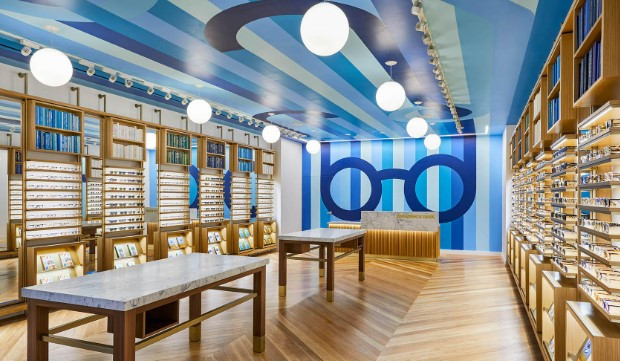
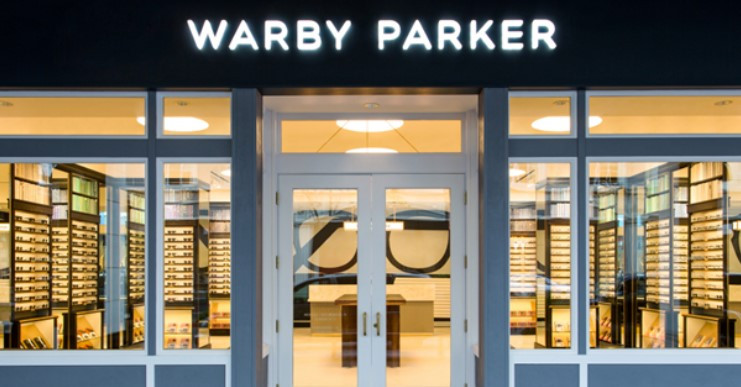
Although Warby Parker began as an online-only retailer in 2010, they quickly realized that many customers wanted to try frames in person. By 2013, they opened their first physical store on Greene Street in New York. Over time, the brand expanded its brick-and-mortar presence significantly. CNBC+2Wikipedia+2
By integrating online and offline data, investing in optimized customer experiences, and building their own point-of-sale systems, Warby Parker created a consistent and smooth omnichannel presence. The Strategy Story+1
This hybrid model — combining DTC convenience with physical showrooms — helped bridge the gap between traditional eyewear shopping and modern consumer expectations.
• Affordable Pricing — Challenging the Status Quo
At launch, Warby Parker offered a full pair of glasses (frames + lenses) starting at US$95, a dramatic undercut compared to many legacy eyewear brands. CNBC+1
This pricing strategy resonated strongly with customers, especially younger shoppers who cared about style but were price-conscious. It proved that premium-looking eyewear didn’t need to come with premium price tags. Osum+1
Social Impact: Eyewear With a Mission
Warby Parker didn’t just want to be a business — they wanted to make a difference. From the start, they embedded social responsibility into their brand identity.
Their flagship initiative: “Buy a Pair, Give a Pair.” For every pair of glasses sold, Warby Parker helps distribute a pair to someone in need. Warby Parker+1
As of recent reports, the company has distributed over 20 million pairs of glasses worldwide through this program — helping people who otherwise might not have had access to proper eyewear. Warby Parker+1
Beyond distribution, the brand also invests in vision screenings and eye‑exams, often targeting schoolchildren via programs like the “Pupils Project.” The aim: to ensure that lack of access to eyewear doesn’t hold people back from education or opportunity. Wikipedia+1
Through this blend of commerce + cause, Warby Parker helped pioneer what later became known as “social entrepreneurship.” Their example pushed other companies to rethink profitability — showing that business success and social good don’t have to be mutually exclusive. Osum+1
This socially conscious identity has become core to Warby Parker’s brand — attracting customers who care about ethics, accessibility, and impact, not just style and convenience. Many customers reportedly are drawn not just by the affordable price, but by the knowledge that their purchase helps someone else. Osum+2Osum+2
Growth, Expansion, and Evolution
Since launching in 2010, Warby Parker has undergone dramatic growth and transformation:
In just a few months after launch, the brand already outpaced its first‑year targets, while the founders were still full‑time students. CNBC+1
Early funding rounds helped accelerate growth — raising millions to scale operations, manufacture frames, and expand reach. Wikipedia+1
By 2013, Warby Parker had opened its first flagship retail store in New York. CNBC+1
Over the years, as of 2025, Warby Parker operates over 275 retail locations (stores across U.S. and Canada), while still maintaining a strong online presence. Wikipedia
For many customers, these stores offer full services including eye exams, on‑site fitting, prescription lenses — making Warby Parker more than just a glasses retailer; more like a full-spectrum vision-care provider. CNBC+1
In addition to glasses, the company expanded into contact lenses in 2019. Warby Parker+1
They also invested in opening their own optical labs (e.g., in Sloatsburg, New York and Las Vegas), allowing them to control quality more tightly, improve turnaround times, and increase margins by handling manufacturing in-house rather than outsourcing everything. CNBC+1
Warby Parker’s evolution from a scrappy, online startup in a dormitory apartment — to a major eyewear brand with national retail footprint and vertically integrated manufacturing — is a textbook example of how a startup can disrupt an entrenched industry.
What Makes Warby Parker Different — Their Competitive Advantages
Warby Parker’s rise wasn’t just luck. Several key aspects gave it a competitive edge:
✅ Affordable quality
By cutting out intermediaries and designing/producing frames themselves, Warby Parker offers fashionable eyewear at prices many traditional brands can’t match — without sacrificing design or quality. Osum+1
✅ Customer-first convenience and flexibility
The Home Try-On program, virtual try-ons, and a seamless blending of online + in‑store experiences provides unmatched convenience. For many people hesitant to buy eyewear online (because of fit, style, etc.), these options removed the uncertainty. CNBC+2The Strategy Story+2
✅ Strong brand identity rooted in social good
Warby Parker’s commitment to giving back for every sale resonated with socially conscious consumers. This brand mission became a differentiator in a market often viewed as expensive or inaccessible — giving Warby Parker both moral leverage and public goodwill. Osum+2Warby Parker+2
✅ Vertical integration & control
Manufacturing their own frames (or controlling partner factories), operating their own labs, and overseeing the supply chain gives Warby Parker quality control, cost efficiency, and flexibility — advantages that many eyewear brands don’t have. Wikipedia+2CNBC+2
✅ Omnichannel presence
By combining online ease with physical stores and in-person services, Warby Parker reduces friction for customers who prefer trying frames in person — a meaningful advantage over online-only or brick-only brands. CNBC+2Wikipedia+2
Impact — More Than Just Business
The success of Warby Parker goes beyond their profit or market share; it’s about redefining the eyewear industry and influencing consumer expectations.
✓ Making eyewear accessible
Because Warby Parker priced their glasses affordably, they opened access to many who might previously have considered prescription eyewear too expensive. What was once considered a luxury became reachable, especially among young professionals and students.
✓ Promoting social responsibility in commerce
Their “Buy a Pair, Give a Pair” initiative, distributing over 20 million pairs of glasses globally, helped set a precedent: business can be a force for good, not just for profit. This has inspired other brands to reconsider their social impact and corporate responsibility.
✓ Changing retail norms
Warby Parker demonstrated that direct-to-consumer, online-first brands can successfully transition to omnichannel models. Their path has become a blueprint for many modern retailers: start online, build community and brand identity, then expand to physical presence — blending convenience with tangible experience.
✓ Encouraging transparency and customer engagement
With straightforward pricing, fun and honest marketing (even sometimes playful, cheeky content), and customer-first policies like home try-on, Warby Parker humanized a category often seen as purely functional or medical. People began to buy eyewear not only for necessity, but for style, identity, and even social values.
Challenges, Criticisms & What’s Next
Of course — no business remains without challenges. As Warby Parker scales, they need to balance growth, quality control, customer service, and mission-driven values. Some common challenges and potential pitfalls:
Maintaining consistent quality across large production volumes and multiple manufacturing partners.
Ensuring that the “give-a-pair” mission retains integrity over time, and the social impact remains meaningful even as the company grows.
Balancing profitability and affordability — as manufacturing costs, logistics, and scaling may pressure margins.
Adapting to changing consumer preferences, including for contact lenses, adjustable lenses, online vs in-store preferences, and fashion trends.
Looking ahead: with their vertical integration and retail footprint, Warby Parker is well-positioned to evolve beyond “just glasses.” As they have expanded into contact lenses, eye‑exams, and full vision‑care services, they seem to be moving toward becoming a holistic vision‑care brand — rather than just an eyewear retailer. Wikipedia+1
If they persist in combining business success with social purpose, Warby Parker could continue influencing not just eyewear, but broader retail and social entrepreneurship norms.
What Warby Parker Means for You (and the Eyewear Market)
For ordinary consumers — especially younger, design‑conscious, socially aware shoppers — Warby Parker offers:
A chance to get prescription glasses or stylish frames at an accessible price, without sacrificing design or quality.
Convenience: from trying frames at home to ordering online or visiting retail stores, they make the process flexible and user-friendly.
A sense of purpose: by purchasing eyewear, you’re contributing to social good — enabling someone else somewhere to get a pair of glasses.
A new standard: Warby Parker helped raise expectations about what eyewear can be — affordable, stylish, ethical.
For the wider industry, Warby Parker’s success sent a signal: traditional price points and retail models are not unassailable. Transparency, direct‑to‑consumer sales, brand mission, and integrated design + supply‑chain control can disrupt even mature industries.
Conclusion: A Visionary Shift in Eyewear
Warby Parker is much more than a glasses company. It is a story about rethinking an entire industry: about questioning why glasses have to be so expensive, and rewriting the rules so they don’t have to be. It’s about combining design, affordability, convenience, and social impact — and proving that a business can succeed while doing good.
What started in a small apartment with four business‑school students has become a major global eyewear brand, with hundreds of retail locations, millions of customers, and tens of millions of donated glasses worldwide. In doing so, Warby Parker didn't just sell eyewear — it reshaped how people see (literally and metaphorically) what an eyewear company could be.
If you — like many consumers today — care about style, price, convenience, and ethics, Warby Parker stands as a compelling example: you don’t have to choose between look, value, and values.
In an industry long dominated by traditional firms and high price tags, Warby Parker proved that disruption, creativity, and conscience could go hand in hand — turning a simple pair of glasses into a symbol of affordability, empowerment, and shared vision.